

Why Is My Washing Machine Banging During the Spin Cycle?
A repeated bang, knock, or heavy thump during the spin cycle usually means something is moving more than it should. The cause may be as simple as an uneven laundry load or a loose hose, but persistent banging can also point to an installation or appliance problem that should not be ignored.
What Does a Banging Washing Machine Usually Mean?
The spin cycle is when the drum reaches its highest speed to remove water from wet laundry. That makes small balance and stability problems much easier to hear.
A washer that seems quiet during washing may begin thumping as the load speeds up. A loose drain hose may strike the back of the appliance. A machine with poor contact at one foot may rock between corners.
The important thing is to identify whether the sound comes from inside the drum, the washer cabinet, behind the machine, or somewhere around the appliance.
Those sounds can seem similar from across the room, but they do not have the same solution.
Listen before you adjust anything: note when the banging starts, whether it follows the speed of the drum, and whether the washer itself moves at the same time.
What Kind of Banging Are You Hearing?
The pattern of the noise can help narrow down where to look first.
Repeated rhythmic thumping
A thump that follows the rotation of the drum often starts with laundry distributed unevenly inside the washer.
Heavy banging with visible shaking
Check whether the machine is rocking, poorly leveled, incorrectly installed, or struggling with a badly unbalanced load.
Banging from behind the washer
Inspect the drain and water hoses. A loose hose may strike the wall or appliance cabinet as vibration increases.
Rattling or banging beside the machine
Baskets, cleaning products, shelves, hangers, tools, or other objects may be touching the appliance.
A brief knock when the cycle changes
Some washers make normal operating sounds as they transition between different stages. Check the manufacturer guidance for your exact model before assuming every short knock is a fault.
Persistent internal banging or scraping
A severe sound that continues after the load and installation have been checked should not be treated as ordinary vibration.
Samsung's washer noise guide explains that some brief knocking during a transition between operating modes can be normal, while repeated thumping may require checking the load and washer balance. See Samsung's washing machine noise guide .
8 Reasons a Washing Machine Bangs During the Spin Cycle
Start with the causes that are easiest to check. Do not immediately assume the washer needs parts or replacement.
The laundry load is unbalanced
Wet clothes, towels, blankets, or bedding can collect on one side of the drum and create repeated thumping as the washer speeds up.
The washer is overloaded
A drum packed too tightly may make it harder for laundry to move and redistribute correctly during the cycle.
The washer is not properly level
Poor leveling can allow the appliance to rock between its support points as the drum reaches high speed.
One or more feet have poor floor contact
A machine can appear straight while still carrying uneven weight at the corners. All four feet should support the appliance firmly.
A hose is hitting the wall or cabinet
A loose drain or supply hose can create a surprisingly loud bang as the machine vibrates during spinning.
The washer is touching another surface
Cabinets, walls, shelves, laundry baskets, and household objects can turn small movements into loud repeated impacts.
Installation hardware was not removed
A recently installed front-loading washer should be checked against the manufacturer's installation instructions for any transport or shipping hardware that must be removed.
The problem may be inside the appliance
Persistent internal banging after basic load, leveling, and installation checks may require model-specific diagnosis or professional service.
Whirlpool's troubleshooting guidance also recommends checking loose hoses, an unbalanced load, and washer leveling when investigating banging during the spin cycle. See Whirlpool's banging-noise troubleshooting guide .
How an Unbalanced Load Creates Repeated Banging
Wet laundry can become much heavier than it was when it entered the machine.
If most of that weight collects on one side of the drum, the washer has to manage an uneven rotating load. The faster the drum spins, the more noticeable the movement may become.
This is why bedding, towels, heavy jeans, bath mats, and bulky items can sometimes create a loud cycle even when previous loads were quiet.
Check the Laundry First
- The banging starts only with certain loads.
- Heavy items have collected on one side.
- Sheets or bedding are tangled together.
- The drum is packed too tightly.
- The problem improves after redistribution.
Pause and Redistribute
- Stop the cycle safely.
- Separate tangled laundry.
- Spread items more evenly.
- Check the recommended load size.
- Restart and listen for the same noise.
If the banging disappears after the laundry is redistributed, the problem was likely related to that particular load rather than a permanent appliance fault.
Samsung also identifies unevenly distributed laundry as a common reason for hitting or bumping sounds during spinning. See Samsung's guidance on hitting sounds during the spin cycle .
Check Behind and Around the Washing Machine
Not every banging sound comes from the drum.
A washer creates vibration during normal operation, and anything touching it may begin moving at the same time.
Before adjusting the appliance, inspect the area around it.
Check the drain hose
Look for a hose that can repeatedly strike the wall or back of the appliance.
Check the water supply hoses
Make sure the hoses are routed safely and are not creating repeated contact with nearby surfaces.
Move baskets and cleaning products away
Lightweight containers can make much more noise than expected when they vibrate against the washer.
Check shelves, tools, and hangers
Nearby household objects can create rattling or banging that sounds like it comes from inside the appliance.
Check wall and cabinet clearance
The machine should not repeatedly strike nearby furniture, cabinetry, or walls while operating.
Simple test: remove anything touching the washer and run the same type of cycle again. If the banging disappears, the sound may have been external to the appliance.
Why a Washer That Rocks Can Bang During Spinning
A washing machine should sit firmly on all four feet.
If one corner has poor contact with the floor, the appliance may shift between support points as the drum speeds up.
That repeated movement can create a heavy knocking or banging sound.
With the machine switched off, gently press down on opposite corners. The washer should feel stable rather than rocking.
Then check the machine from side to side and front to back with a level. Adjust the feet only according to the instructions for your specific washer.
Important: a machine can look visually straight and still be unstable. The real test is whether all four feet maintain firm contact with the floor.
For the full process, read: How to Level a Washing Machine Properly and Reduce Excessive Vibration .
How to Stop a Washing Machine From Banging During the Spin Cycle
Work through these checks one at a time so you can tell which change actually improves the problem.
Pause and redistribute the load
Separate tangled laundry and spread the weight more evenly around the drum.
Remove nearby objects
Create clearance around the washer and move anything that may be rattling or striking the cabinet.
Inspect the hoses
Check whether a drain or supply hose can hit the appliance or wall during spinning.
Test for rocking
The appliance should remain firmly supported when gentle pressure is applied at the corners.
Level the washer
Check front to back and side to side, then follow the manufacturer instructions for adjusting and securing the feet.
Check the installation if the washer is new
Confirm that all required installation steps were completed, including removal of any shipping hardware specified for the model.
Improve grip and vibration isolation
Once the machine is stable and level, anti-vibration pads can help reduce movement and some vibration transfer beneath the appliance feet.
Stop if severe internal banging continues
Persistent internal impacts after basic troubleshooting may need qualified diagnosis rather than another floor accessory.
Reduce Washer Movement at the Floor
Once the load, hoses, installation, leveling, and surrounding area have been checked, the contact points beneath the washer feet become the next area to improve.
A machine that shifts during heavy spin cycles can create extra noise as its position changes. Improving grip beneath the feet can help the appliance stay more stable.
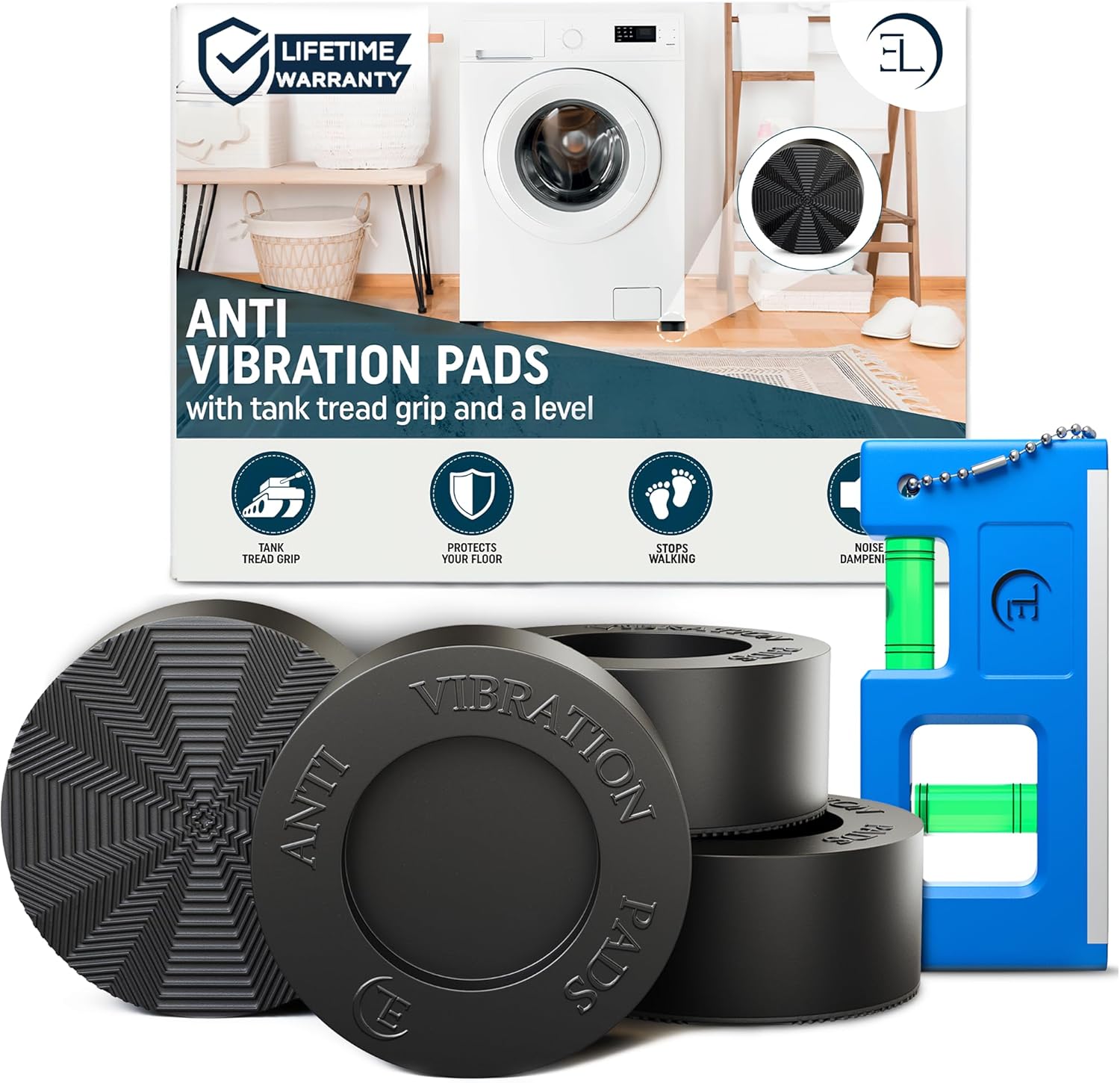
ELEON Anti Vibration Pads for Washing Machines, Dryers & Appliances
ELEON Anti Vibration Pads create a durable rubber contact point beneath each appliance foot to help improve floor grip, reduce movement, and limit some direct vibration transfer after the machine has been correctly installed and leveled.
- Includes 4 anti-vibration pads and 1 magnetic level.
- Tank-tread grip pattern helps limit side-to-side movement.
- Wider support beneath each appliance foot.
- Designed for washing machines, dryers, and other appliances.
- Adds grip, clearance, and separation from the floor.
Best-results order: balance the load → clear the area around the washer → secure the hoses → test for rocking → level the machine → install the pads → run a controlled test cycle.
Do not use pads to hide a serious problem: if the banging clearly comes from inside the appliance and continues after the machine is stable, stop troubleshooting the floor.
When Anti-Vibration Pads May Help With Banging
Pads are most relevant when the banging is connected to appliance movement, poor grip, or vibration passing through the washer feet.
The Washer Is Moving
- The machine shifts during heavy spin cycles.
- The feet have limited grip on a smooth floor.
- Movement makes nearby objects rattle.
- Floor vibration is adding to the noise.
- The washer is already properly leveled.
Internal or Installation Faults
- A badly unbalanced laundry load.
- Shipping hardware left installed.
- A washer that rocks because it is not level.
- Loose objects trapped inside the appliance.
- Persistent internal mechanical banging.
For a fuller explanation, read: Do Anti-Vibration Pads Work for Washing Machines?
Is Any Knocking During a Washing Machine Cycle Normal?
Not every single knock means the washer is damaged.
Some machines make short operating sounds when changing between stages of the cycle. The sound may be brief, repeat in the same place during normal cycles, and stop quickly.
That is different from heavy banging that continues throughout the spin cycle or makes the machine move significantly.
Brief Operating Sounds
- A short knock during a cycle transition.
- The washer remains stable.
- The sound stops quickly.
- No leaking or warning signs appear.
- The behavior matches the model guidance.
Persistent Heavy Banging
- The sound continues through the spin cycle.
- The machine moves or rocks heavily.
- The noise suddenly became much worse.
- Grinding or scraping happens at the same time.
- Leaks or other warning signs appear.
Because washer designs differ, always compare unusual sounds with the operating guidance supplied for the exact appliance model.
A Simple Test to Find Where the Banging Comes From
Making several changes at once can hide the real cause.
Use the same troubleshooting order each time.
Listen during the next spin cycle
Note whether the sound comes from the drum, behind the washer, beside the cabinet, or through the floor.
Correct the laundry load
Redistribute the items and test the machine again.
Remove external contact points
Clear objects away and inspect the hoses before another test.
Correct rocking and leveling
Confirm that all four feet remain firmly supported.
Reduce remaining movement at the feet
Once the washer is stable, improve grip and vibration isolation where appropriate.
If the sound disappears at one step, you have learned much more than you would by changing everything at the same time.
Match the Next Guide to What Your Washer Is Actually Doing
Banging often overlaps with movement, shaking, and vibration. Use the guide that best matches the main symptom.
The washer is moving across the floor
Read: How to Stop a Washing Machine From Walking During the Spin Cycle .
The entire machine is shaking violently
The washer rocks while turned off
The floor or nearby rooms are vibrating
The problem is mainly general washer noise
Read: How to Reduce Washing Machine Noise During the Spin Cycle .
When Washing Machine Banging Needs Professional Attention
A severe internal banging sound should not be ignored just because the machine still completes the cycle.
Stop using the appliance and investigate further if you notice:
- Persistent grinding or scraping from inside the washer.
- Repeated violent impacts inside the cabinet.
- A visibly loose or abnormal drum.
- Water leaking beneath or around the appliance.
- Electrical or burning smells.
- The machine moving significantly despite correct leveling.
- The banging suddenly becoming much worse.
- The washer failing to complete cycles normally.
Important: anti-vibration pads are designed to help with grip, movement, and vibration transfer. They should never be used to hide severe internal banging or an unsafe appliance problem.
Washing Machine Banging During the Spin Cycle: FAQs
Find the Source Before You Try to Silence the Bang.
Start with the laundry load, then check the hoses, surrounding objects, washer stability, and leveling. Once the appliance is properly installed and stable, improving grip beneath the feet can help reduce movement and unnecessary vibration during the spin cycle.