

Do Anti-Vibration Pads Work for Washing Machines?
Anti-vibration pads are often sold as a simple fix for shaking, noise, and a washer that moves during the spin cycle. But do they actually work—or are they just another laundry-room accessory?
So, Do Washing Machine Anti-Vibration Pads Actually Work?
Yes—but it is important to understand exactly what they are designed to do.
A washing machine creates vibration as the drum accelerates and spins a heavy load of wet laundry. Some of that movement passes through the appliance feet and into the floor. If the floor is smooth, the feet have limited grip, or vibration is transferring into the surrounding structure, the result can be more noise and movement than expected.
Anti-vibration pads sit between the appliance feet and the floor. Depending on their design, they can provide a wider contact area, increase grip, separate the appliance from the floor, and help dampen some of the vibration being transferred downward.
The realistic expectation: anti-vibration pads can improve a properly functioning washer that is noisy, slippery, or transferring vibration into the floor. They cannot repair a washer with a serious installation or mechanical problem.
What Anti-Vibration Pads Can—and Cannot—Fix
The easiest way to decide whether pads are worth buying is to separate problems they can realistically improve from problems that need a different solution.
Washer slides on a smooth floor
Pads can often help. Level the washer first, then add grip under every appliance foot.
Vibration transfers into the floor
A durable isolation layer can help reduce some of the vibration passing into the surrounding surface.
The washer is not level
Pads are not the first fix. Adjust the appliance feet and remove any rocking before adding them.
Laundry repeatedly becomes unbalanced
Pads may reduce the resulting movement, but load size and distribution still need to be corrected.
Shipping bolts are still installed
Pads will not fix this. Follow the manufacturer's installation instructions for the exact washer model.
An internal component is damaged
Pads cannot repair the fault. The underlying mechanical problem needs proper diagnosis.
This is why manufacturers such as LG and Samsung recommend checking installation, load balance, floor contact, and leveling when troubleshooting excessive washer vibration.
Why Pads Can Reduce Washing Machine Movement
Anti-vibration pads are simple products, but several different effects can make them useful under a washer.
They improve grip
Smooth appliance feet on tile, laminate, vinyl, or other hard floors may have limited resistance to movement. A grippy rubber surface can make it harder for the washer to slide sideways during the spin cycle.
They create a wider contact point
A wider base can provide a more stable point of contact between each appliance foot and the floor, especially compared with a relatively narrow metal or plastic foot.
They help isolate vibration
Durable rubber can act as a layer between the washer and the floor, helping reduce some of the vibration transferred from the appliance into the surrounding surface.
They separate the appliance from the floor
The added separation can help protect the contact area from direct scuffing and marks while also creating extra clearance beneath the appliance.
Anti-vibration pads are not just an aftermarket idea. GE Appliances also offers washer and dryer anti-vibration pads intended to minimize vibration transfer to the floor.
When Do Anti-Vibration Pads Work Best?
The best results usually come from a washer that already works correctly but needs better contact with the floor.
The washer is properly leveled
Every foot should make firm contact with the floor. The machine should not rock when you gently test the corners.
The floor is hard and smooth
Extra grip can be particularly useful where a machine tends to shift across tile, laminate, vinyl, or similar flooring.
You can feel vibration through the floor
If the main problem is vibration transferring into the floor or nearby structure, an isolation layer under the appliance feet may help.
The washer moves during heavy spin cycles
A well-designed grip pattern can help limit side-to-side shifting when the machine is otherwise correctly installed.
A Better Approach: Level First, Then Add Grip
One of the biggest mistakes is placing pads under a washer and expecting them to compensate for an unstable setup.
A better process is to check the machine first, eliminate rocking at the corners, and then install the pads so they can focus on grip and vibration isolation.
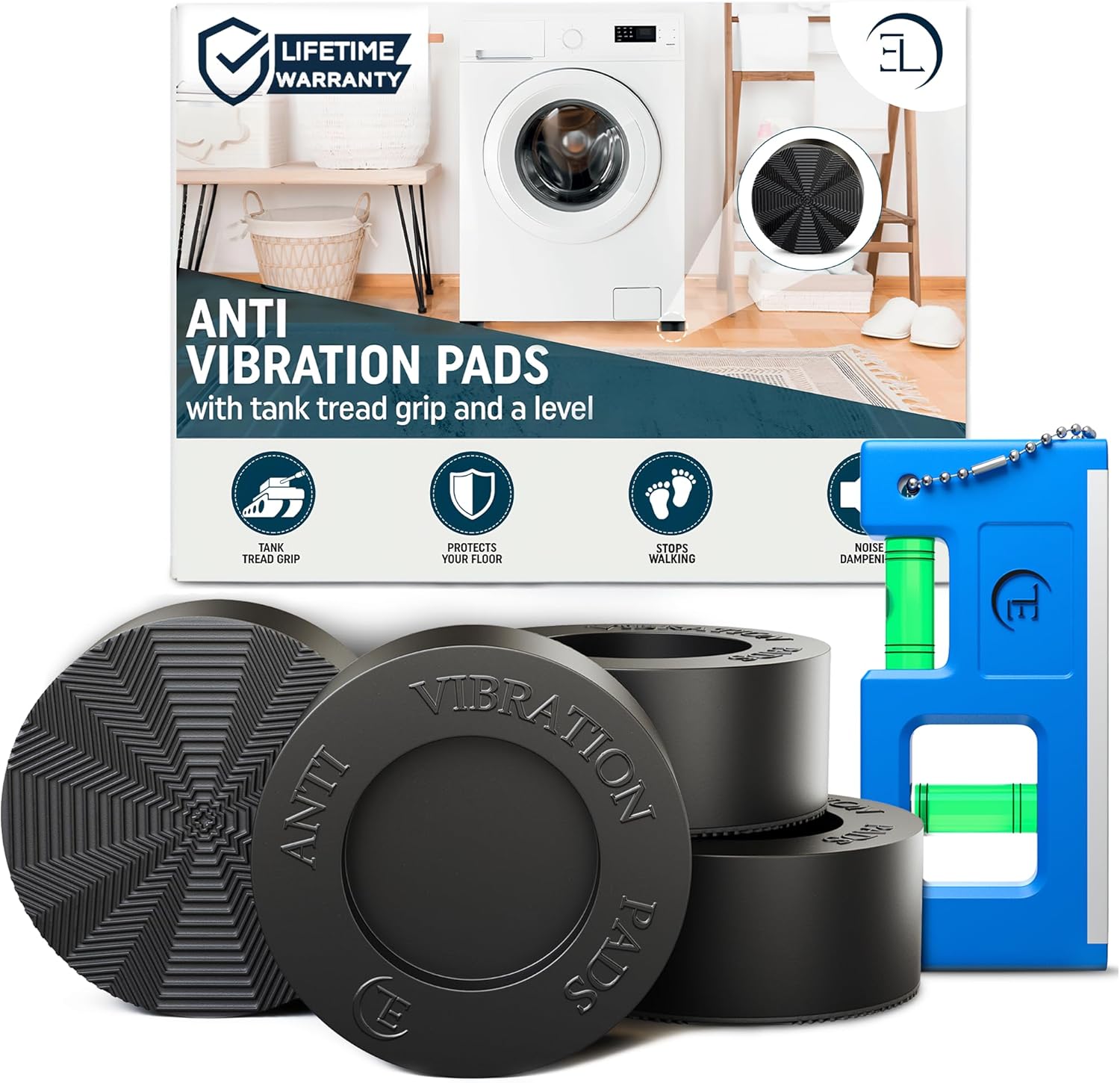
ELEON Anti Vibration Pads for Washing Machines, Dryers & Appliances
The ELEON set combines four durable anti-vibration pads with a magnetic level, helping you check the appliance setup before adding grip and vibration isolation under each foot.
- Includes 4 anti-vibration pads and 1 magnetic level.
- Tank-tread grip pattern helps limit side-to-side movement.
- 3-inch diameter creates a wider base under each appliance foot.
- 1.75-inch opening fits many standard washer and dryer feet.
- 0.95-inch lift adds grip, clearance, and floor separation.
Best order: check installation → level the washer → eliminate rocking → install the pads → run a test cycle.
What Difference Should You Actually Expect?
Anti-vibration pads are more likely to produce an improvement than complete silence.
Every washing machine creates some movement. A fast-spinning drum, changing load distribution, and normal weight sensing can all produce vibration during different parts of the cycle.
With the right setup, the improvement may show up as:
- Less side-to-side movement.
- A washer that stays closer to its original position.
- Less vibration felt through the floor.
- Less rattling caused by movement against nearby surfaces.
- Better protection between the appliance feet and the flooring.
If your main problem is a washer physically travelling across the room, read how to stop a washing machine from walking during the spin cycle .
When Anti-Vibration Pads Probably Will Not Solve the Problem
Pads should not be used to hide a serious vibration problem. Check the underlying cause first if the machine is shaking violently or making unusual impact noises.
The machine rocks while turned off
This usually points to poor foot contact or incorrect leveling. Stabilize the washer before adding pads.
The washer was recently installed
Confirm that all installation steps were completed, including removal of any required shipping hardware.
The problem happens only with certain loads
Large, small, tangled, or uneven loads can create imbalance inside the drum. Load management may be the real solution.
The machine has mechanical warning signs
Grinding, leaking, electrical smells, repeated banging, or a visibly loose drum should be investigated rather than covered up with vibration pads.
For a broader diagnosis, read why a washing machine may shake violently .
How to Get the Best Results From Anti-Vibration Pads
The quality of the installation matters almost as much as the pads themselves.
Clean and inspect the floor
The contact area should be clean, dry, stable, and free from debris that could interfere with the pads.
Check the washer for rocking
Test the corners gently. The machine should feel firmly supported before installation continues.
Level the appliance
Check both side to side and front to back. Adjust the appliance feet according to the instructions for your specific model.
Position a pad under every foot
Make sure each appliance foot is correctly positioned inside its pad and that the machine remains stable.
Run a test cycle
Watch the washer during the spin cycle and check whether movement, vibration transfer, and noise have improved.
Safety first: washing machines are heavy. Do not try to lift or tilt one by yourself. Follow the appliance manufacturer's instructions and use appropriate help when positioning the machine.
Are Anti-Vibration Pads Worth Buying?
For the right problem, yes.
The Washer Needs Better Grip or Isolation
- Your washer is already level.
- The machine slides on a hard floor.
- You feel vibration through the floor.
- You want more grip under the feet.
- You want floor separation and protection.
The Underlying Setup Is Still Wrong
- The machine rocks while turned off.
- Shipping bolts may still be installed.
- The washer shakes only with bad loads.
- The floor itself is weak or unstable.
- The machine shows mechanical warning signs.
In other words, anti-vibration pads are best viewed as a stability and isolation upgrade—not a substitute for correct washing machine installation.
Anti-Vibration Pads for Washing Machines: FAQs
Yes, Anti-Vibration Pads Work—When You Use Them for the Right Problem
A good set of pads can improve floor grip, reduce movement, limit vibration transfer, and protect the contact area beneath your appliance. Just remember that the best results start with a washer that is correctly installed, properly leveled, and mechanically sound.