

Washing Machine Anti-Vibration Pads vs Mats: Which Is Better?
Anti-vibration pads and full-size rubber mats are both designed to sit between a washing machine and the floor. But they solve the problem in different ways—and the better choice depends on whether your priority is targeted stability, vibration isolation, easier installation, or broader floor protection.
Anti-Vibration Pads vs Mats: The Main Difference
Anti-vibration pads sit directly beneath the washer's individual feet. A mat, by contrast, covers most or all of the appliance footprint and creates one large layer between the machine and the floor.
That difference changes how each product behaves. Pads focus on the exact points where the washer transfers weight and vibration into the floor. Mats spread the appliance over a much larger surface and can provide broader protection underneath the machine.
Both approaches can be useful. GE Appliances sells individual washer and dryer anti-vibration pads specifically to reduce vibration transfer to the floor, while specialist rubber manufacturers such as Rubber-Cal also produce full-size washer mats for traction and broad equipment protection. The right choice depends on the problem you are actually trying to solve.
Start with the washer itself: neither pads nor a mat should be used to hide poor leveling, shipping bolts, an unstable floor, repeated load imbalance, or a mechanical fault.
Which Is Better for Most Washing Machines?
For a washer that is correctly installed and properly leveled, individual pads are usually the better choice when the main problem is movement, limited floor grip, or vibration transferring through the appliance feet.
A full-size mat may be better when you want wider coverage beneath the entire machine, broader protection from scuffs, or a large rubber layer across the appliance footprint.
You Want Targeted Stability
- The washer is already properly leveled.
- The feet slide on a smooth floor.
- You want grip directly under each contact point.
- You want a compact solution with minimal floor coverage.
- You want easier access for cleaning around the appliance.
You Want Broader Floor Coverage
- Protecting a larger floor area is the main goal.
- You want one continuous rubber surface under the machine.
- The laundry area is used for more than vibration control.
- You are comfortable moving the appliance onto a larger surface.
- The mat is specifically designed for heavy appliances.
Pads vs Mats: The 7 Differences That Matter Most
Where the washer contacts the material
Pads sit directly under the appliance feet, so each support point gets its own grip and isolation layer. A mat creates one broad surface beneath the whole machine.
Targeted vibration control
Pads focus directly on the points where weight and vibration pass into the floor. Mats use a larger sheet of material to create a broader layer under the appliance.
Stopping side-to-side movement
Well-designed pads can add grip directly beneath each washer foot. A mat can also add traction, but its performance depends heavily on the material, thickness, surface texture, and how the machine sits on it.
Floor protection
Pads protect the four contact areas under the washer feet. A mat covers a much larger footprint, which can be useful when broad surface protection matters more than a minimal installation.
Installation
Both require safely positioning a heavy appliance, but a large mat must be aligned beneath the full washer footprint. Individual pads only need to be correctly positioned under the feet.
Cleaning and access
Pads leave most of the floor exposed. A full mat creates a larger covered area beneath the appliance, which can make routine access and cleaning feel different depending on the laundry-room setup.
How easy it is to diagnose a problem
Individual pads make it clear whether each appliance foot is properly seated. With any solution, the washer should still be checked for level, rocking, and secure floor contact before the final test cycle.
Why Individual Anti-Vibration Pads Are Often the Better Fit
A washing machine does not transfer its weight into the floor evenly across the entire cabinet. The actual support comes through the feet. That is why individual pads can be such a practical solution.
GE Appliances describes its own four-pad system as a way to minimize vibration transfer to the floor. LG also advises making sure all four leveling feet have firm floor contact and, on slippery surfaces, suggests non-skid pads to help prevent movement.
They work directly under the support points
Each washer foot gets its own stable contact surface rather than relying on one large sheet underneath the machine.
They can add grip without covering the whole floor
This is useful on tile, hardwood, laminate, vinyl, concrete, and other common hard floors where the washer feet may shift during a heavy spin cycle.
They keep the solution compact
Only the four appliance contact points are covered, leaving the rest of the floor visible and accessible.
They make the setup easier to inspect
You can check that every foot is seated correctly and confirm that the washer no longer rocks before running a test cycle.
When a Full-Size Washing Machine Mat Makes More Sense
Mats are not automatically worse. They simply solve a slightly different version of the problem.
A full-size rubber mat can be useful when your priority is broader coverage beneath the appliance. Specialist washer mats are designed to create a continuous rubber layer for traction and floor protection across the machine's footprint.
You want coverage across the whole appliance footprint
A mat protects more surface area than four individual contact points.
Broad floor protection matters more than a minimal setup
A continuous layer can help separate more of the appliance area from the finished floor.
The mat is designed specifically for heavy appliances
Thickness, material quality, surface texture, and load resistance matter. A random household mat should not be treated as a substitute for a purpose-built appliance product.
Important distinction: a floor-protection mat, a drip tray, and an anti-vibration mat are not automatically the same product. Choose based on the actual purpose you need.
For Washer Movement and Vibration, Start at the Feet
If the washer is already correctly installed and properly leveled, the most direct place to improve grip and vibration isolation is underneath the appliance feet themselves.
That is the logic behind the ELEON Anti Vibration Pads: four individual rubber supports for the four washer feet, plus a magnetic level to help check the machine before the pads are asked to do their job.
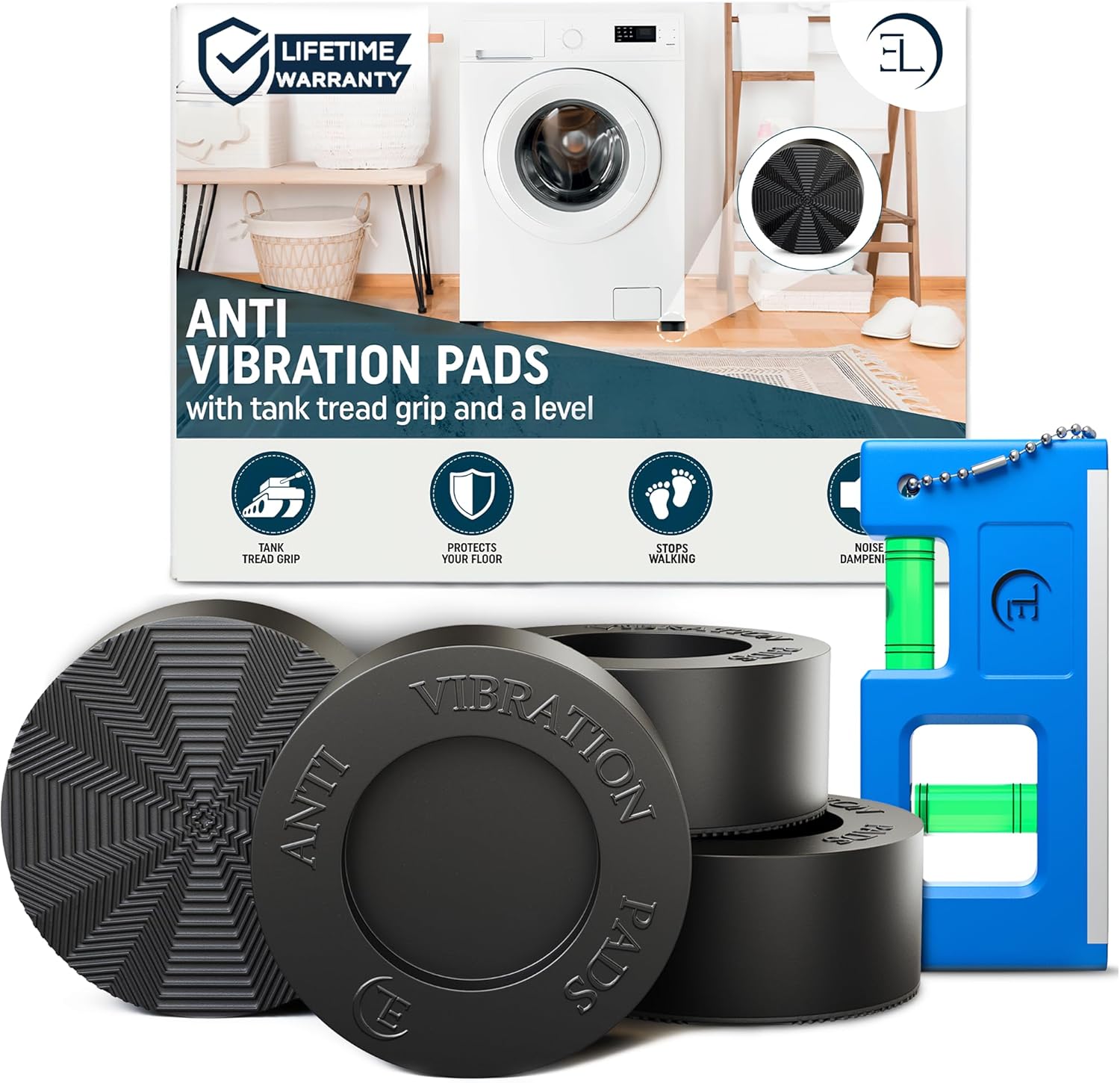
ELEON Anti Vibration Pads for Washing Machines, Dryers & Appliances
ELEON uses four individual rubber pads to create a wider, grippier base beneath each appliance foot while helping reduce movement, vibration transfer, and floor marks.
- Includes 4 anti-vibration pads and 1 magnetic level.
- Tank-tread grip pattern helps limit side-to-side movement.
- 3-inch total diameter creates a wider base under each foot.
- 1.75-inch opening fits many standard washer and dryer feet.
- 0.95-inch lift adds grip, clearance, and floor separation.
Best-results rule: install correctly → level the washer → eliminate rocking → place one pad under every foot → run a test cycle.
Which One Should You Choose for Your Specific Problem?
Your washer slides across a smooth floor
Usually choose pads. Targeted grip under each foot directly addresses the points where the machine is contacting the floor.
You feel vibration through the floor
Usually start with pads. A rubber isolation layer directly under every support point is the more targeted first approach.
You want broad protection under the whole machine
A mat may make more sense. It covers a larger floor area than four individual pads.
The washer rocks while turned off
Choose neither yet. Fix the leveling and floor contact problem before adding pads or a mat.
The washer shakes only with certain loads
Fix the load first. Bulky, tangled, very small, or overloaded cycles can create imbalance inside the drum.
The machine has grinding, leaking, or violent movement
Choose neither. Accessories should not be used to hide signs of an installation or mechanical problem.
5 Mistakes to Avoid With Pads and Mats
Buying before checking the washer
A badly leveled washer can remain unstable regardless of what is placed underneath it.
Assuming more rubber automatically means better isolation
Product design, material, thickness, grip, and the washer setup matter more than footprint alone.
Ignoring the washer-foot fit
Individual pads need to fit and support the appliance feet correctly. The washer should remain stable after installation.
Using a random household mat
A general-purpose mat is not automatically designed to support a heavy vibrating appliance.
Skipping the test cycle
The final setup should be observed during operation. Recheck any washer that still rocks, walks, or shakes excessively.
Still Not Sure What Is Causing the Movement?
The right accessory depends on the actual problem. If the machine is physically travelling across the floor, read our guide to stopping a washing machine from walking during the spin cycle .
If the movement is severe, sudden, or accompanied by banging, use our broader troubleshooting guide on why a washing machine may shake violently .
And before choosing either pads or a mat, remember the same rule that applies to every washer-stability problem: the machine should be correctly installed, properly leveled, and firmly supported first.
Washing Machine Pads vs Mats: FAQs
Choose Pads for Targeted Stability. Choose a Mat for Broader Coverage.
For most properly installed washers dealing with floor grip, movement, or vibration transfer, individual anti-vibration pads are the more focused solution. A full mat earns its place when protecting a wider floor area is the bigger priority.